
Stage 8
From Negrar di Valpolicella to San Pietro in Cariano
It is the final stage of the Cammino, a route that is not too demanding physically and designed to end the journey in a relaxed yet evocative way.
Along the way you encounter true gems of medieval art such as San Marco al Pozzo and the Pieve of San Floriano, two places that preserve centuries of history and spirituality.
The route passes through ancient hamlets, renowned wineries and vineyards tended like gardens, symbols of the passion and dedication that have long defined Valpolicella.
ROUTE
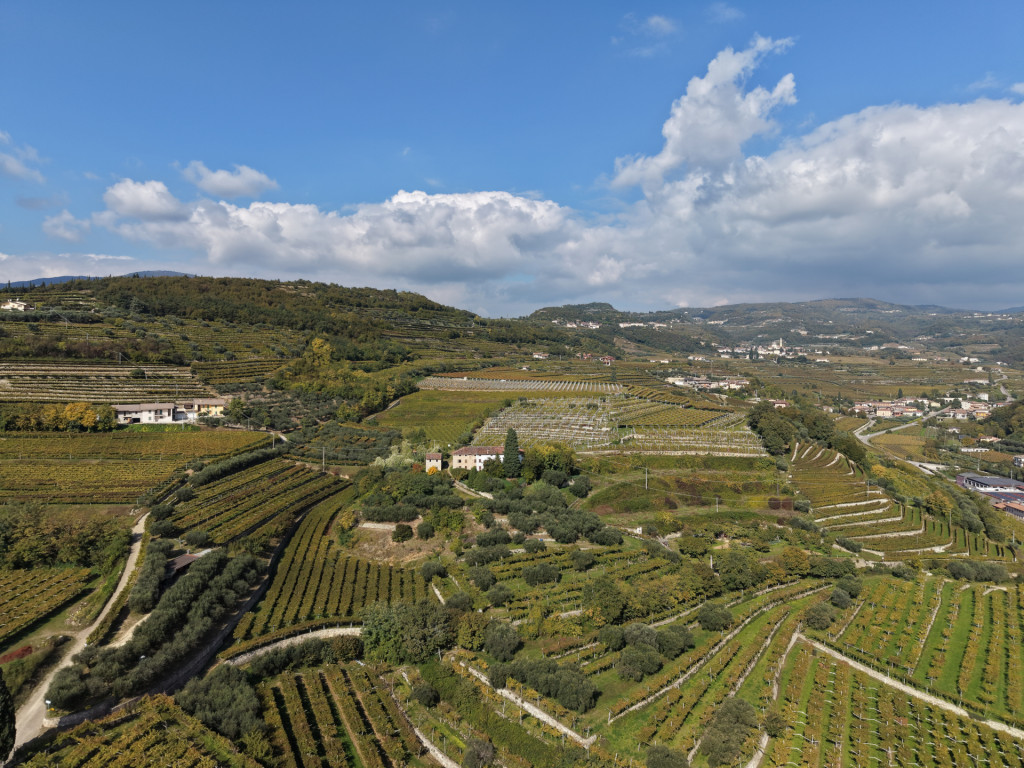
From the centre of Negrar di Valpolicella, the starting point of the final stage, walk alongside the parish church and take Via G. Marconi. Turn left onto Via Don F. Piccoli, then continue along Via Don N. Mazza and Via Crosara, climbing through the vineyards towards Villa Spinosa. Here, turn left onto a small paved road to reach the ridge of Monte Masua. The view opens out over the valleys of Negrar and Marano di Valpolicella, with cultivated hills and scattered hamlets reflecting the long agricultural history of this area. Turn right and continue for about 250 metres, then turn left onto an unpaved road leading to the picturesque hamlet of Gnirega. From here, turn right and pass through the hamlets of Marognole and Bignele, continuing until you reach the Vajo dei Masi, which you briefly descend. Then take a small road that, after about 300 metres, climbs to the right through the vineyards and leads to the beautiful courtyard of Novaia, easily recognisable by its dovecote tower. Continue north along an easy unpaved road to the locality of Olmo. Here, turn left to reach the paved road and then turn left again onto Via Campel, heading towards Marano di Valpolicella. Descend along the SP34 and, shortly afterwards, turn right into the hamlet of Canzago, characterised by elegant manor houses and harmonious rural architecture. The route then descends along a beautiful path to the hamlet of Pozzo, where you will find the small church of San Marco al Pozzo, a Romanesque jewel with a well-preserved medieval fresco on its southern wall. After passing through the hamlet, climb along a panoramic path to Via Cà del Pipa. After about 600 metres, turn left onto another path leading to the parking area in San Floriano. Cross the SP4 and reach the churchyard of the Pieve di San Floriano, one of the most important Romanesque churches in the Province of Verona, a masterpiece of medieval art and a central landmark in the religious and cultural history of Valpolicella. After visiting the parish church and its surroundings, continue along Via della Pieve towards the provincial road. Cross it and take the unpaved road opposite the Zymè winery. Continue for approximately 1.5 kilometres along pleasant country lanes, then descend westwards until you reach the small church of San Francesco. Follow Via San Francesco, passing the “Ortiche” community garden, and continue until you reach a small roundabout. Cross the road and continue along Via San Francesco to the junction with the SP4. Turn right and, shortly afterwards, cross at the pedestrian crossing to enter a public park. Walk through the park, keeping to the left, until you reach Via Roma. Turn right and continue along a pleasant street lined with historic houses until you reach Piazza Ara della Valle. Continue along Via Roma to the junction with Via Molino, turn right and, after approximately 100 metres, reach Piazza San Giuseppe, the final point of the Cammino del Vino e della Pietra.
Here the journey comes to an end: a route through nature and culture, stone and vineyards, linking Lessinia and Valpolicella in a single embrace of landscapes, work and memory.



Where to Eat

Marano di Valpolicella
Bar Barchessa
Piazza dello Sport, 1
San Pietro in Cariano
💛 Osteria San Giuseppe (Amici del Cammino) 💛
Piazza San Giuseppe, 3
tel: 045 468 4296
https://www.osteriasangiuseppe.eu/
Piazza San Giuseppe, 3
tel: 045 468 4296
https://www.osteriasangiuseppe.eu/
___________________________________
Pizzeria dai Butei
Via Roma, 54
tel: 045 770 2411
___________________________________
Osteria Bar Al Ponte
Piazza Cavalieri Vittorio Veneto, 1
tel: 045 770 3677
Where to Sleep

Marano di Valpolicella
💛 Azienda Agricola Terre di Gnirega (Amici del cammino) 💛
Via Gnirega, 7
tel: +39 333 7701122
https://www.terredignirega.it
___________________________________
💛 Agriturismo Le Bignele (Amici del cammino) 💛
Via Biniele, 4
tel: +39 388 4066545
https://www.lebignele.it/
___________________________________
Agriturismo Corte Vaona
Via Novaia, 4
https://www.cortevaona.it/it/
San Pietro in Cariano
Hotel Valpolicella International
Via L. V. Beethoven, 3
tel: 045 468 4296
https://www.hotelvalpolicella.net/it/
Cantine

Marano di Valpolicella
💛 Terre di Gnirega (Amici del cammino) 💛
Via Gnirega, 7
tel: +39 333 7701122
https://www.terredignirega.it
___________________________________
💛 Le Bignele (Amici del cammino) 💛
Via Biniele, 4
tel: +39 388 4066545
https://www.lebignele.it/
___________________________________
Novaia
Via Novaia, 4
https://www.cortevaona.it/it/
San Pietro in Cariano
Cantina Sociale
Via Valpolicella, 61
Tel. 045 6838448
https://www.ristoranteinvalpolicella.it/
A Glimpse of Stage 8
Must-See
Villa Spinosa
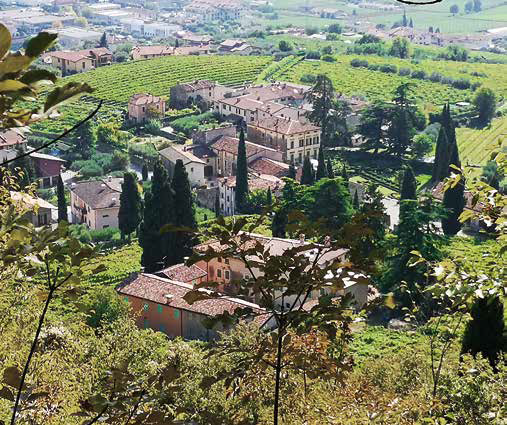
Set in a panoramic position west of Negrar, on the hill of Jago dall’Ora, the villa overlooks the valley from an elevation of about 250 metres, within an open and light-filled landscape. The complex is dominated by a nineteenth-century manor house, south-facing and flanked by a formal Italian garden, where box hedges follow the natural slope of the hill.
The building, compact and well balanced, rises over two main floors plus an attic and stands out for the refinement of its architectural details, visible in the moulded cornice and the elegant window frames. Both the street portal and the entrance on the north façade bear the owners’ coat of arms which, since 1928, has given the villa its name: a rampant lion holding a “thorny” branch.
Villa Novaia
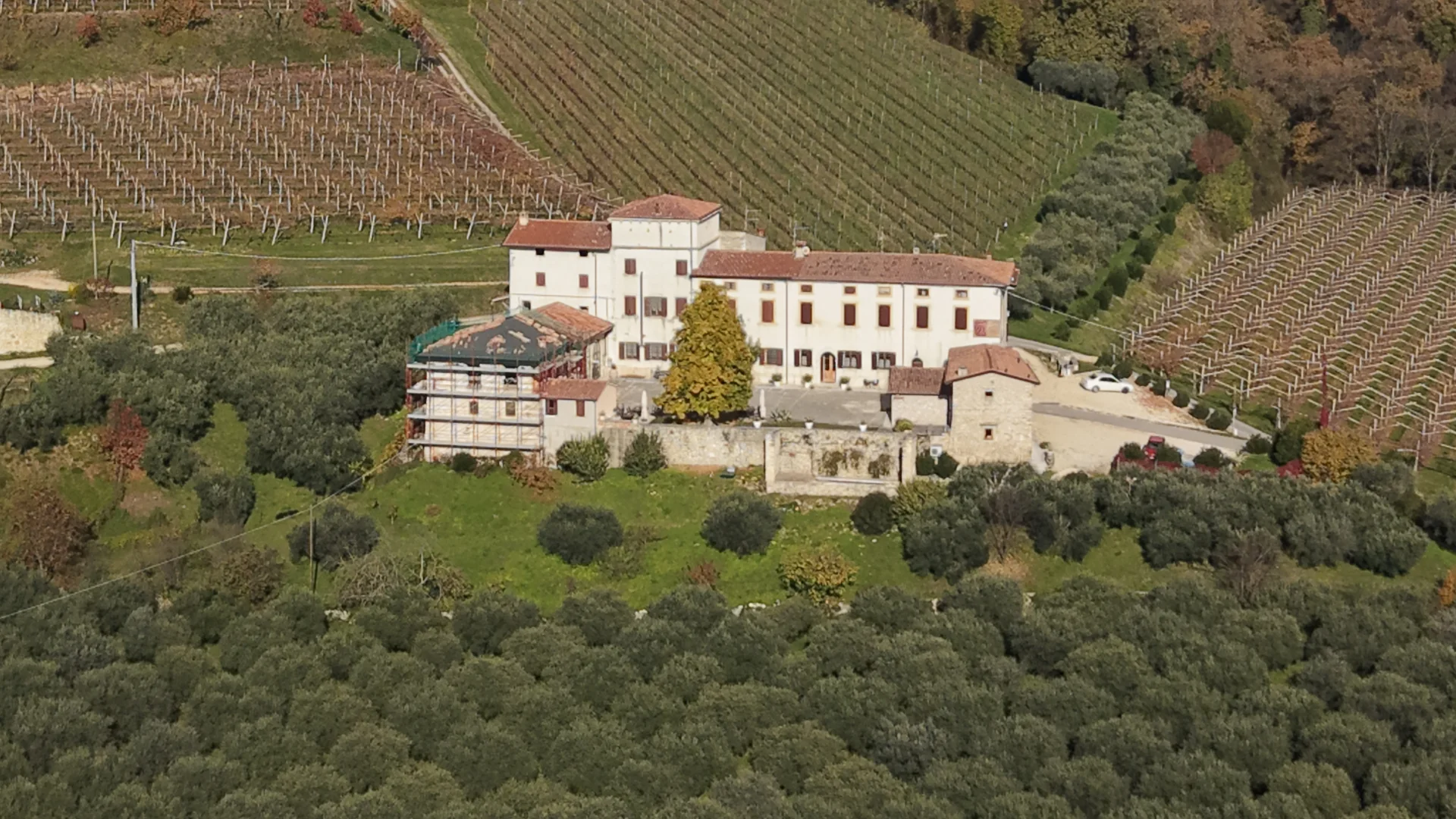
Villa Novaia stands in a commanding position east of Marano, on the ridge of Contrada Novaia, a place name referring to land brought into “new” cultivation. Its origins are likely connected to the castrum of Novalee, mentioned in an early-fifteenth-century document.
Although the complex has undergone several alterations, it still preserves the characteristics of a medieval fortified residence: a strategic hilltop location at the watershed between the Marano valley and a smaller side valley, and a solid quadrangular substructure supporting a walled courtyard. The most ancient element is a tower-like core, later transformed into a dovecote, which reveals the original function of a late-medieval lordly tower-house, serving as residence and refuge during stays in the countryside.
San Marco a Pozzo
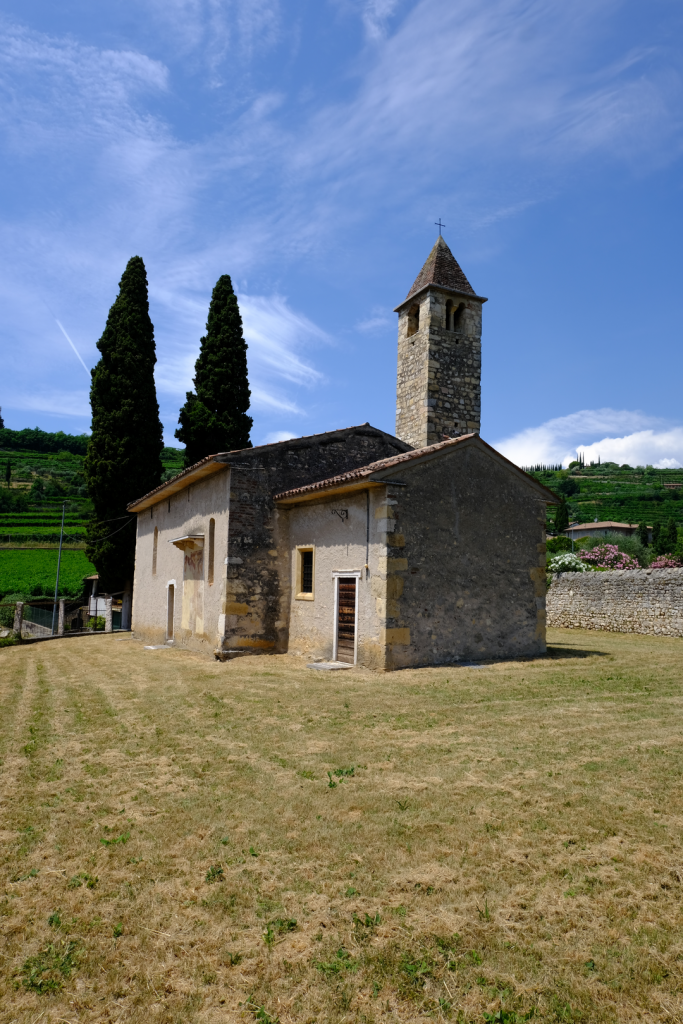
The Church of San Marco, once dedicated to Saint Stephen, in the hamlet of Pozzo, has preserved its Romanesque layout despite a few minor alterations over the centuries. It features a simple gabled façade and a single nave covered by wooden trusses.
Of particular note are the 14th- and 15th-century frescoes: the oldest can be seen on the bell tower wall; on the north wall, a Saint Catherine and a fragment of a Crucifixion; and on the south wall, a Madonna enthroned.
Outside, on the south wall of the church, there is a striking Crucifixion dated 1441, with two kneeling donors at the foot of the Cross.
Inside, the chapel on the north wall houses an altarpiece by the Flemish artist Michele Meeves, who also crafted the elegant wooden frame. Another painting of Saint Mark adorns the main altar.
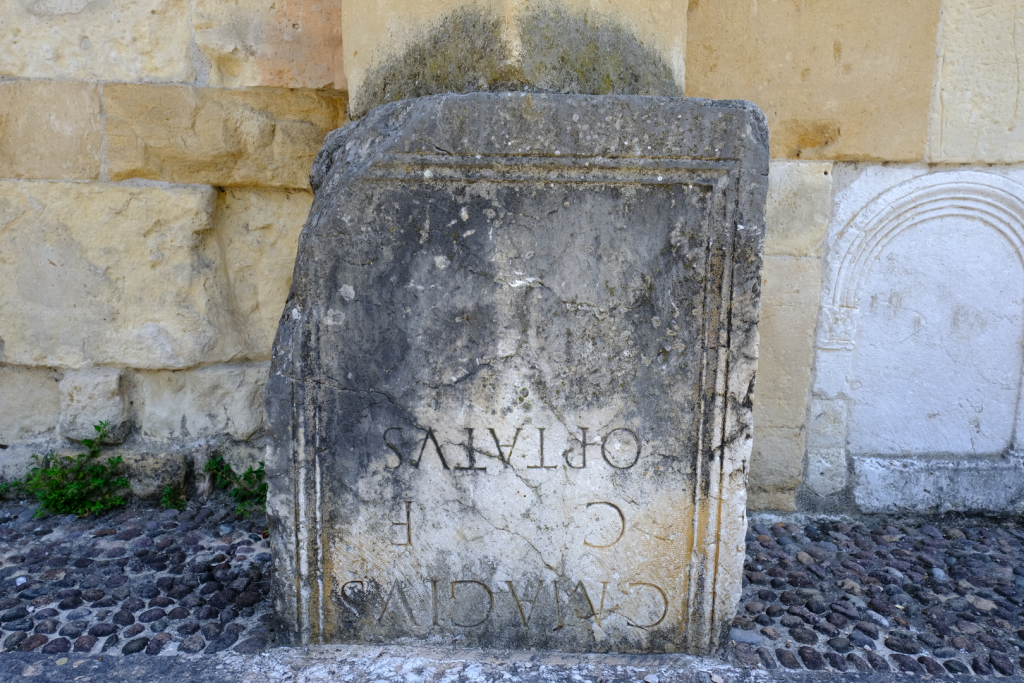
The peaceful atmosphere, a few remaining cypress trees, the small bell tower, and even a Roman inscription stone embedded in the wall, all contribute to the church’s discreet yet pervasive charm.
Pieve di San Floriano
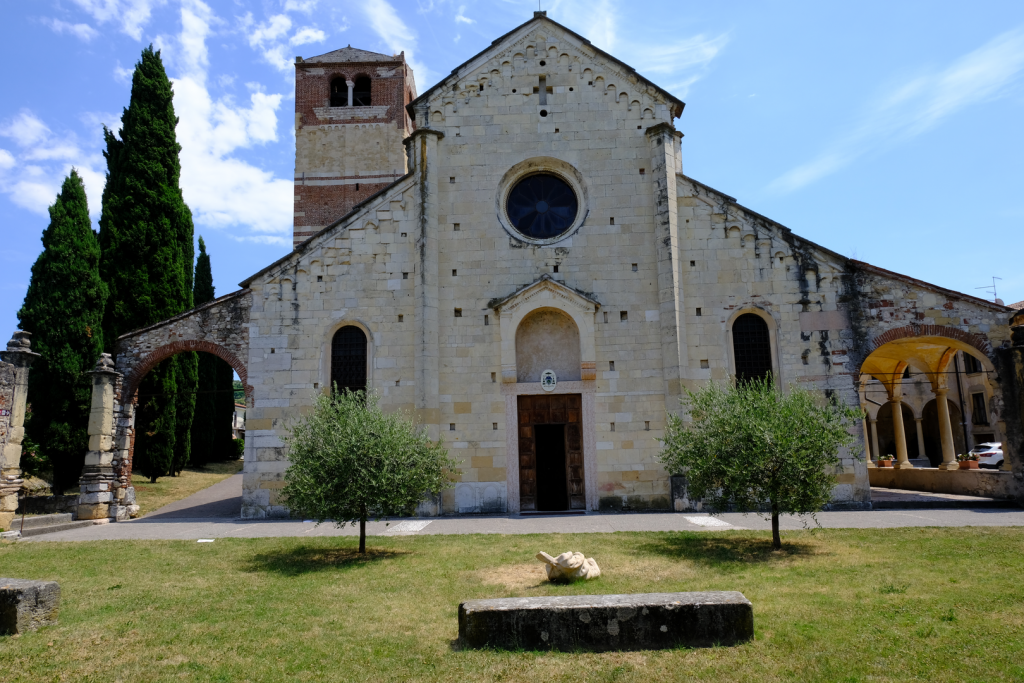
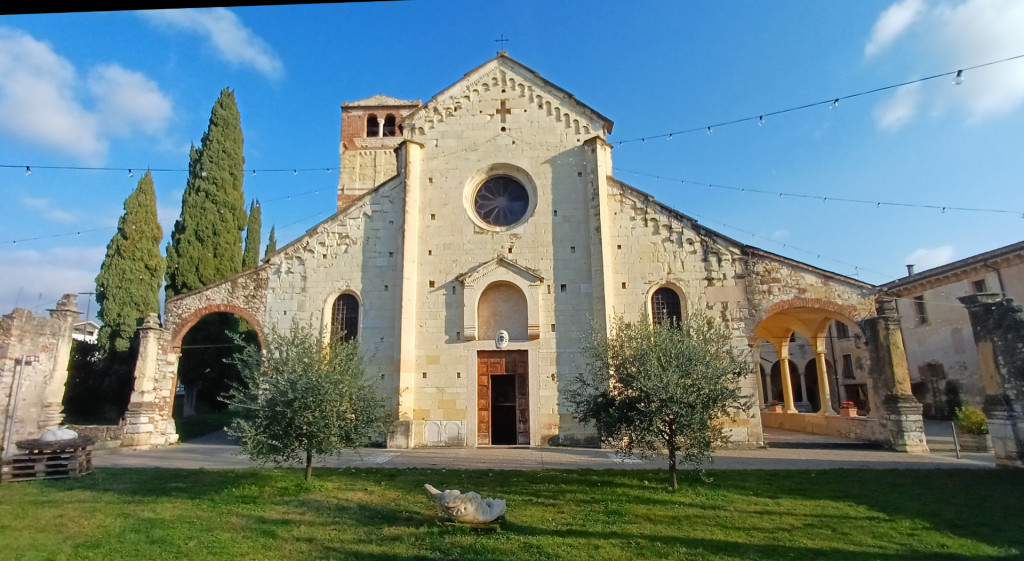
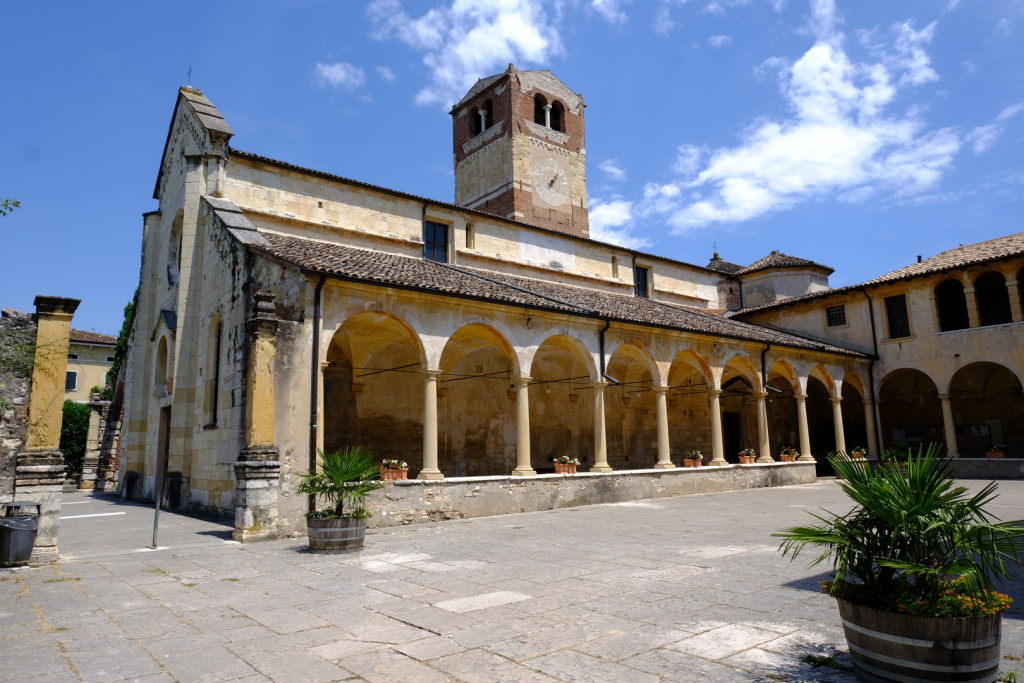
The pieve—as medieval country churches were called when they served as the religious center for a wide rural territory—of San Floriano is a fine example of Romanesque architecture, built in tuff blocks at the beginning of the 12th century, inspired by the churches of San Giovanni in Valle and Santo Stefano in Verona.
The gabled façade is divided into three sections, corresponding to the interior naves, by two pilasters that rest on inverted Roman votive altars. Additional fragments of ancient Roman funerary monuments are embedded in the church walls, at the base of the bell tower, and in the surrounding enclosure wall.
The façade is topped with a decorative band of blind arcading, a motif that also appears on the high walls of the massive square bell tower, also Romanesque in style.
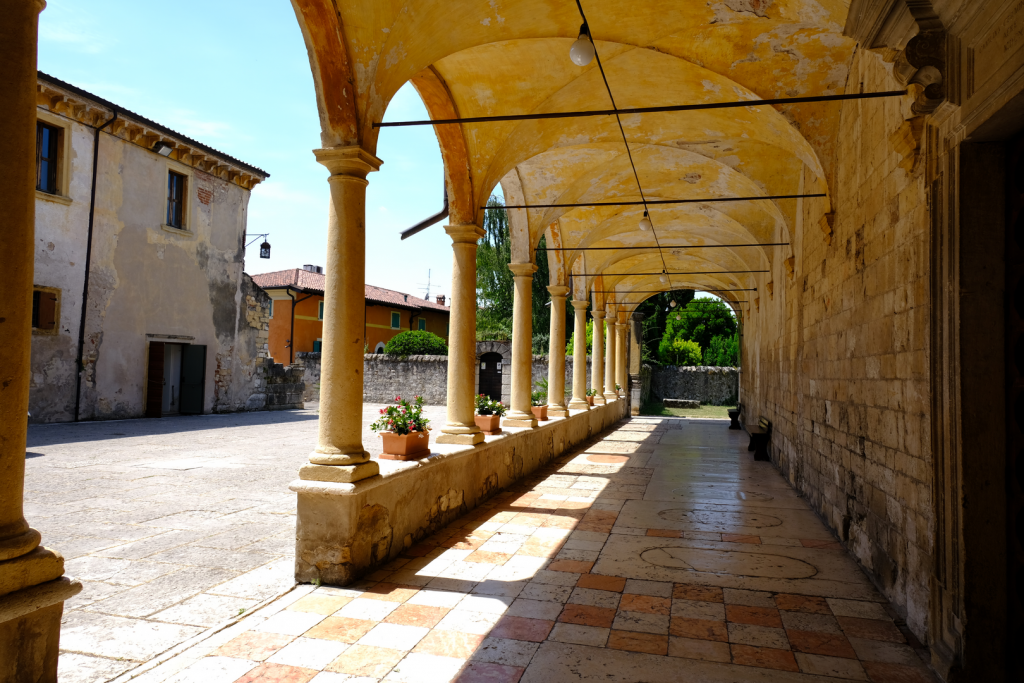
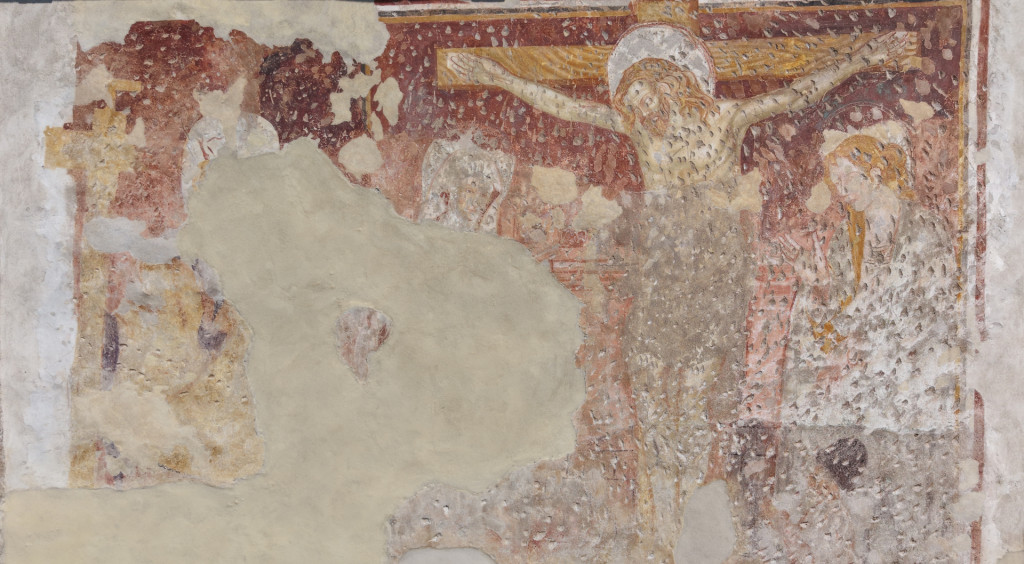
The southern side of the church is flanked by an elegant cloister, where, beneath the first arch, one can admire a fine Crucifixion fresco from the early 15th century. Several sculptural fragments from the earlier church have been displayed on the cloister walls.
The interior, recently restored to reflect its Romanesque origins, features three naves separated by alternating columns and pillars. In several places, traces of the original monochromatic geometric decorations have reemerged, offering a glimpse into the church’s ancient aesthetic.
Ara della Valle
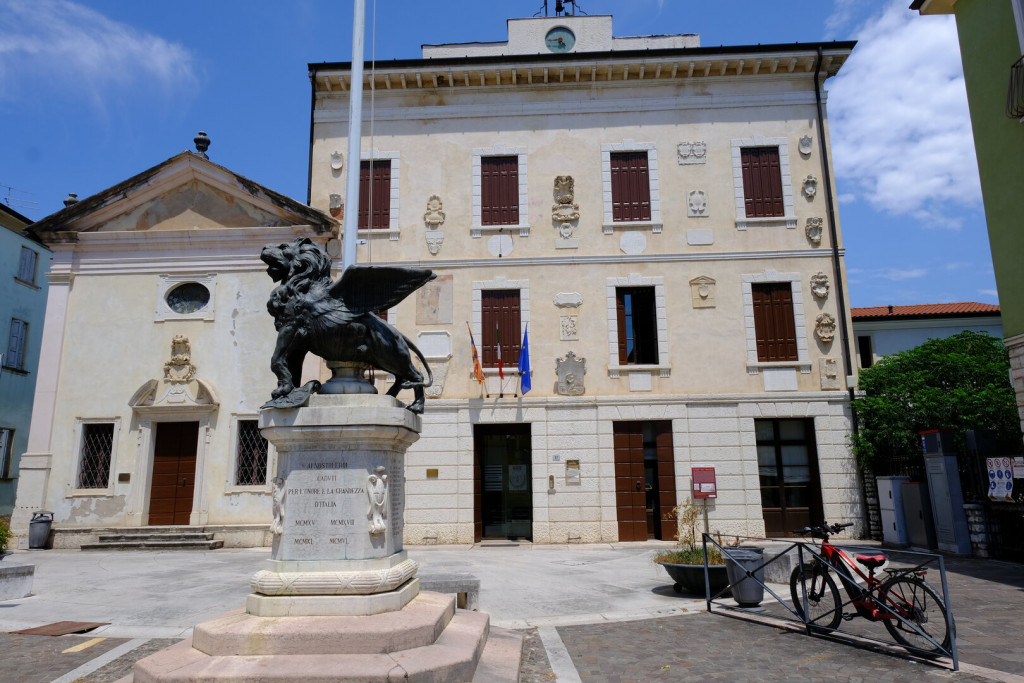
On Colle Menzago, in San Pietro in Cariano, overlooking today’s Piazza Ara della Valle, stands a building that for centuries represented the political and administrative center of Valpolicella: the former town hall, once the seat of the Vicario of Valpolicella.
This hill, along with nearby Colle di Cariano—where the parish church stands—forms the historic core of the town. Beginning in the mid-15th century, this is where the mayors and councillors of the valley’s various communities would gather under the guidance of the Vicario. The original structure featured a public loggia.
Next to it, toward the end of the 17th century, a small chapel dedicated to Saint Clare of Assisi was built, and it is still visible today.
During the time of the Serenissima Republic of Venice, the Vicario was a Veronese nobleman, appointed directly by Venice. His role was to oversee and coordinate the civic life of the many Valpolicella communities, serving as a point of reference for administrative and legal matters. He was not merely a figurehead, but a true institutional mediator between the local autonomies and central authority.